Penang Gastronomy: Navigating George Town's Best Stalls
Published on: May 27, 2026 | Written by: Culinary Expert Desk
Widely regarded as the food capital of Southeast Asia, the island of Penang is a melting pot of Malay, Chinese, and Indian culinary cultures. Its street food tells the story of maritime migration and rich regional spice routes.
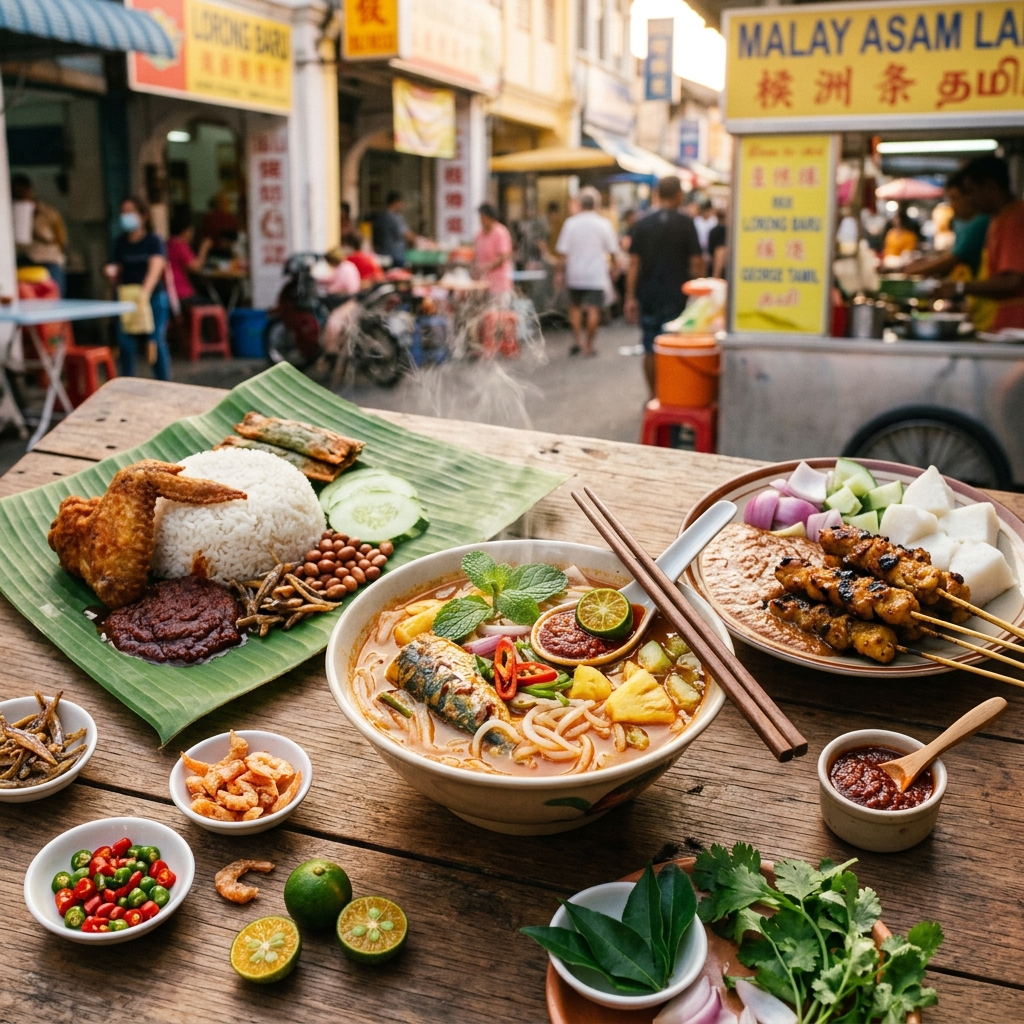
Walking through the narrow streets of George Town—a UNESCO World Heritage Site—is a sensory adventure. Smokes rise from wok-heaped stoves, and the sweet aroma of grilled satay skewers floats through the air. For decades, multi-generational street vendors have specialized in a single signature dish, perfecting the balance of sour, sweet, salty, and spicy elements. To help you navigate this culinary paradise, we have compiled the absolute highlights you must try, along with specific location data and essential hawker etiquette.
The culinary identity of Penang was forged at the crossroads of maritime trade. British colonizers, Chinese merchants, Peranakan settlers, Indian laborers, and native Malay fishing communities all left their mark on the local gastronomy. Over time, these disparate culinary threads wove into a complex, harmonious tapestry, creating dishes that are completely unique to Peninsular Malaysia.
Iconic Penang Masterpieces & Preparation Methods
Every dish in Penang has a story, usually told by the street vendor who has been stirring the same iron pot for fifty years. Here are the core masterpieces that represent the absolute pinnacle of Penang street gastronomy.
Unlike the rich, coconut-heavy laksas of the southern peninsula, PenangРІР‚в„ўs signature version is tangy, sour, and intensely savory. It features thick, springy rice noodles submerged in a dark, mackerel-based fish broth flavored with lemongrass, tamarind (assam), turmeric, and galangal. Before serving, the bowl is topped with shredded cucumber, raw red onions, fresh mint leaves, sliced red chilies, pineapple chunks, and a generous dollop of sweet, viscous black shrimp paste (hae ko). The result is an extraordinary explosion of complex flavors that stimulates every corner of the palate.
Literally translating to "stir-fried flat rice noodles," this Chinese-influenced dish is cooked over extreme, roaring heat (wok hei). Flat noodles are tossed in a wide iron wok with light and dark soy sauce, fresh whole prawns, fresh blood cockles, bean sprouts, Chinese chives, eggs, and a touch of chili paste. The finest vendors in Penang still cook over natural charcoal embers, imparting a distinctive, smoky, lightly caramelized flavor profile that cannot be replicated by gas burners. A master hawker balances the flash cooking of cockles while keeping the prawns succulent and preventing the noodles from becoming greasy.
Bite-sized pieces of marinated chicken, beef, or mutton are threaded onto hand-carved bamboo skewers and slow-grilled over charcoal embers. The marinade features lemongrass, shallots, garlic, coriander seeds, and turmeric, which gives the meat its bright yellow hue. The skewers are constantly basted with oil and coconut milk during grilling, producing charred, caramel edges. They are served with a rich, thick, mildly spicy peanut dipping sauce, fresh cucumber slices, red onions, and compressed rice cakes (ketupat).
To blend in smoothly with the locals at crowded hawker hubs like Chulia Street or New Lane, follow these simple practices:
- вњ” Table Reservation (Choping): Secure a seat before ordering. At busy centers, placing a small pack of tissues or a water bottle on a chair is a widely accepted local way to claim a table while you stand in queue.
- вњ” Note Your Table Number: When ordering from different vendor stalls, tell them your table number. They will deliver the food directly to your seat once cooked. You pay cash on delivery.
- вњ” Keep Small Cash Bills Handy: The vast majority of traditional hawker vendors operate purely on cash (Malaysian Ringgit). Bring small bills (RM 10, RM 5, and RM 1 coins) to make transactions swift.
- вњ” Order Drinks: Hawker tables are often owned or managed by the beverage vendor. It is standard polite practice to order at least one drink (such as fresh lime juice, sugar cane juice, or local herbal tea) per table as courtesy.
Elite Hawker Markets & Stalls Directory
If you want to experience the absolute pinnacle of street food heritage, make sure to visit these specific locations on your culinary exploration:
| Stall / Market Name | Location & Street | Must-Order Dish | Opening Hours |
|---|---|---|---|
| Lorong Selamat Stalls | Lorong Selamat, George Town | Char Kway Teow with Large Prawns | 11:00 AM – 6:00 PM |
| Chulia Street Market | Lebuh Chulia (Intersection of Love Lane) | Assam Laksa & Wantan Mee | 6:00 PM – 11:30 PM |
| New Lane Hawker Centre | Lorong Baru (off Jalan Macalister) | Grilled Satay, Char Kway Teow, & Cendol | 5:00 PM – Midnight |
| Air Itam Laksa | Jalan Pasar (near Kek Lok Si Temple) | Traditional Tangy Assam Laksa | 10:30 AM – 7:00 PM |
| Gurney Drive Food Court | Persiaran Gurney | Pasembur (Indian Rojak) & Seafood Satay | 4:30 PM – Midnight |
A Short Culinary Glossary for Travelers
Learning a few simple Malay and Hokkien food words can help you customize your order and show respect to the vendors:
Spicy (standard default)
Less sweet (for local drinks)
Take away / pack to go
Dine in / eat here
Hokkien sweet shrimp paste
"Breath of the wok" smokiness
Conclusion: A Heritage Worth Preserving
Penang's street food is not merely quick nourishment; it is an living monument of cultural exchange and architectural history. Every steaming bowl of Assam Laksa and smoky plate of Char Kway Teow represents a culinary lineage passed down through generations. By dining respectfully, paying in local currency, respecting local seating traditions, and learning basic ordering vocabulary, you become part of this ongoing cultural conservation effort. Let your appetite lead you through the ancient alleyways of George Town for the culinary journey of a lifetime.